

HELPING YOU FIND ANSWERS TO ALLERGY, QUICKLY!
Below are answers to some of the questions that we are most frequently asked. We hope that you find the answer you are looking for here, but if not please don’t hesitate to give our Customer Support team a call on 0800 3047047.
Submitting a sample
Which blood tubes can I use to send a sample?
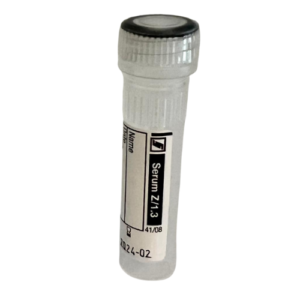
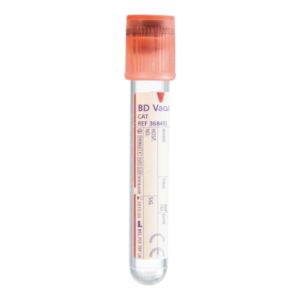
These can be plain tubes (white top or red if using a vacutainer) or serum gel tubes (brown top), please see the images below. Serum gel tubes must be spun down before sending. Please note that tubes that contain anticoagulants can interfere with the test and should not be used.

Should we send serum or whole blood?
Our range of tests has been developed using serum. This part of the blood carries the antibodies that are detected by the tests to show markers for allergy. Should a practice not have access to a centrifuge then whole blood samples are acceptable to send. However, there is some risk with this as the blood may haemolyse during transport resulting in us being unable to obtain sufficient serum for testing.
Please refer directly to this handy reference guide ‘How to reduce the risk of non-viable samples’.
How much serum do I need to send for each test?
Please see the submission form for the exact amounts of serum required for each test.
I want to send a sample but don't have a submission box, how can I get one?
If you do not have a submission box, please contact our Customer Support team on 01494 629979 or by email at Vetorders.uk@nextmune.com and one will be posted to you by the next working day.
If you have a sample that you would like to send but do not have a submission box, please ensure the packaging complies with UN3373 regulations, details of which can be found here.
Do we need to withdraw an animal from medication before sampling?
Some medication, such as steroids, may require a period of withdrawal prior to sampling and testing. Please refer to our Withdrawal Guide for further information. We offer a free of charge storage facility if you would like to take a sample when the animal is symptomatic but perhaps wait to test at a later date.
Should animals be fasted before taking a sample?
For dogs and cats, fasting for 8-12 hours (an overnight fast with free access to water) is often helpful to reduce the likelihood of lipaemia. Please see reference guide: How to reduce the risk of non-viable samples (UK).
At what age is it best to run an allergy test?
Ideally, a patient should be over 12-15 months old before testing for environmental allergy. This allows maternally derived antibody levels to subside and exposure to a complete allergy season to occur, regardless of the time of year they were born.
In reality, there may be cases where testing earlier is felt necessary (we advise waiting until at least 6 months minimum). In cases tested under 12-15 months, we would advise re-testing when over 12 months as further hypersensitivities may develop and warning the owner that this is likely to be required.
For food allergy testing we would recommend waiting until at least 6 months old.
Is your laboratory open at the weekend?
The laboratory is open Monday to Friday. If you have sampled at the end of the week, we would recommend storing the serum sample in the fridge and posting it on Monday.
How do I find out test pricing details?
Please email vet.orders@nextmune.com for pricing information.
What options do I have to post my sample?
The following postal options are available:
Royal Mail Postal Drop Off
- Royal Mail Red Pillar box (normal postal method). Simply place your sample submission envelope into your local postal box.
- Post Office/Depot
- Parcel Post Box (available 24/7). Please note the size limit for mail is 44cm x 35cm x 16cm.
To see your local drop-off points for pre-paid postal items (which includes tracked mail) click here
Royal Mail Parcel Collection
With this FREE pre-paid on-line service, you can now choose to book a collection for your Nextmune Laboratories post. Simply click here.
How do I book a Royal Mail collection from my practice?
Please see the ‘Booking A Parcel Collection’ guide.
How many parcels can be collected?
You can arrange from 1 up to 5 parcels to be collected per day free of charge by Royal Mail.
RESULTS
What are your turn around times for results?
Our standard turnaround times for results are 2-4 working days, on receipt of a sample.
How do I get client copies of results?
In an effort to help save our environment, we now email digital copies of results to the practice, these can then be forwarded to the client. This can be requested by contacting our Technical Support team by phoning 0800 3 047 047 or emailing Vetorders.uk@nextmune.com
Why do the environmental test results now look different?
Environmental test results are now reported in a new visual format, the key information to note is highlighted and explained in this annotated guide. This simple to use, visual format helps when explaining results to clients as well as allowing more accurate comparison of responses to aid in allergen selection for avoidance or ASIT, as it conveys more subtle differences in reactivity. If you would like any individual advice on specific results or a general training session for your team, please get in touch with our Technical Support team on 01494 629979 or at Vetorders.uk@nextmune.com
What are AU scores on the canine and feline environmental results and why have they changed?
AU values (or arbitrary units) have replaced our previous class scores of 0-5. In our new results format, the higher the AU score, the higher the allergen reactivity. The AU values range from 0 to 100, replacing the previous class scores of 0-5 to allow clearer visualisation of the results in a relative way. This can make it easier to compare the responses to different allergens within a single animal’s results and so help with allergen selection for avoidance or for inclusion in allergen-specific immunotherapy. Please remember though that these results should be always be interpreted alongside the full clinical history. You can find a helpful guide to interpreting results in our Practice Portal.
What changes have been made to the food results?
The food test results remain as class scores but now also include a column that shows a tick mark when appropriate, to indicate those foods that we would recommend you consider for a dietary trial. Foods are also grouped into bands to offer more information on cross-reactivity.
Why are the moulds separate from the other results and why do they have two vertical lines?
Moulds and Malassezia are listed separately from the other environmental allergens because atopic dogs often show increased levels of IgE to this group without any clinical relevance. To be considered significant, they would need to show a very high level of reactivity and be interpreted in light of the patient’s symptoms and exposure history. For this reason, we have introduced a second vertical line to highlight the highest scores. If deemed relevant then moulds, apart from penicillium species, may be considered for inclusion in allergen-specific immunotherapy.
What does cross-reactivity between allergens mean?
Cross-reactivity between allergens occurs when an antibody for one specific allergen binds another, different allergen. This happens because some allergens share common structural regions known as epitopes (antibody binding sites), which enable an antibody for one allergen to recognise another allergen as being the same. Cross-reactivity is more likely to occur with closely-related species (e.g., certain grasses or mites).
As an example, a dog may have a Type I hypersensitivity to the house dust mite Dermatophagoides farinae, and so have IgE antibodies against this allergen. Upon serological testing, the result is positive for this particular mite but may also be positive for other mites such as the storage mite Acarus siro, even if the animal has not been exposed to them, because they share cross-reacting epitopes. If the dog is then clinically exposed to Acarus siro, they may have an allergic response.
Some animals have IgE antibodies specific for carbohydrate epitopes rather than, or sometimes in addition to, protein epitopes. These carbohydrate epitopes, termed cross-reactive carbohydrate determinants (CCDs), are present in many species (e.g., plants and invertebrates) and, as such, can also be a source of cross-reactivity. IgE antibodies to CCDs are generally not thought to be clinically relevant in animals and may contribute therefore to false positive serological results.
For this reason, Nextmune Laboratories UK developed a CCD blocker to counteract this particular type of cross-reactivity – more information can be found here.
How does knowledge of cross-reactivity affect selection of foods for a dietary trial?
Research carried out at Nextmune Laboratories UK demonstrated cross-reactivity exists between beef, lamb and cow’s milk.1 Using this knowledge, if a serology food test has shown a positive reaction to beef, when selecting food for an elimination diet, in addition to avoiding beef, it would also be sensible to avoid milk and lamb. Ideally, you would avoid all mammalian proteins and select a food from a different animal group altogether, for example, fish or soya, as these are less likely to show cross-reactivity. Our food test results are displayed in different food groups to help make this selection process easier.
1 Bexley, J., Nuttall, T.J., Hammerberg, B. and Halliwell, R.E. (2017), Co-sensitization and cross-reactivity between related and unrelated food allergens in dogs – a serological study. Vet Dermatol, 28: 31-e7. https://doi.org/10.1111/vde.12335
How do I select allergens for immunotherapy if cross-reactivity is suspected?
Unfortunately, there is not a straightforward answer to this; it depends on the individual situation. In the case of reactions to house dust mites and storage mites, it has been suggested using the main mite from each group may be sufficient; other researchers however suggest including all allergens which show a reaction. Careful evaluation of the animal’s history is always essential regardless and may be helpful in working out which are the most likely causal allergens. If the pet shows reactivity to a large number of allergens, cross-reactivity may enable you to reduce the number of allergens included in the immunotherapy.
Please contact our Customer Support team on 01494 629979 or by email at Vetorders.uk@nextmune.com if you would like to discuss which allergens to select for use in Allergen-Specific Immunotherapy (ASIT).
NEW Nextlab PORTFOLIO
Why have you changed your portfolio of tests?
We have chosen to revise our portfolio to meet the needs of today’s clinical environment. We develop, manufacture and run all of our test portfolio in house.
Sarcoptes
Since the advent of new ectoparasiticides (namely isoxazolines) these are now often used as a rule-out for many ectoparasites including Sarcoptes, so the need for testing has diminished.
Cytology
An increasing number of practices are doing in-house cytology, which affords many benefits over sending away for this service. Our intention is to offer additional support for practices on in-house skin cytology, so please ask if this is something that will help you.
Malassezia and Staphylococcus IgG
The IgG score had limited impact on the clinical decisions made about cases based upon feedback we received, so it was decided to remove these two tests to provide better value for money. This was not the case for Malassezia/Staphylococcus IgE, so these tests remain.
Does Nextmune Laboratories offer separate tests for Malassezia IgE or Staphyloccocus IgE?
Malassezia IgE is no longer available as a standalone test but instead is included in our canine Nextlab Complete environmental and food, and our Nextlab Environmental tests. Staphylococcus IgE is available as a stand-alone test and can be added as and when you feel it is appropriate to the case.
I am not sure which new test I should choose?
These three easy-to-follow test comparison guides are specifically designed to help you choose which of the Nextlab tests are most appropriate for your requirements:
Why has Cod Liver Oil been removed from the equine test?
Research has shown that oil is unlikely to be a common allergen.
Which Nextmune Laboratories UK tests now include a CCD blocker?
Following extensive research, Nextmune Laboratories UK has developed its own unique Cross reactive Carbohydrate Determinant (CCD) blocker and it is incorporated into to our canine and feline IgE environmental tests.
The majority of serological results are unaffected by CCDs, but in some cases the presence of CCD-binding IgE could lead to a false positive result. The Nextmune Laboratories CCD blocker inhibits the binding of N-glycan specific IgE so that only serum IgE antibodies specific to the protein portion of allergens (which are those thought to be of clinical significance) are detected.
For more detailed information on CCD’s and the Nextmune Laboratories CCD blocker please click here.
Therapies
How do I order Allergen Specific Immunotherapy?
To order ASIT we just need the following:
- A list of allergens to include in the therapy. Simply select the appropriate allergens on our immunotherapy order form.
- A valid Special Import Certificate (SIC) which you obtain from the VMD. Please refer to our guide on how to apply for an SIC
Once you have the SIC and completed immunotherapy order form, please send them to Vetorders.uk@nextmune.com and we can place the order for you.
If you have any questions, or need any further information please contact our Customer Support Team on 01494 629979 or email Vetorders.uk@nextmune.com.
PLEASE NOTE:
Staphage Lysate (SPL)
There is currently an ongoing (potentially long-term) supply issue for this therapy. Unfortunately, at this time point, we are unable to give an indication of when the product may be available again. If you would like to be updated with further information regarding availability or have any questions, please contact our Customer Support Team by email at Vetorders.uk@nextmune.com or by phone on 01494 629979.
What do I do if I think an animal has had a reaction to Immunotherapy?
Please contact out Customer Support team on 08003 047047 or email Vetorders.uk@nextmune.com with the animal and owner details along with the clinical signs of the animal with as much detail as possible. The Customer Support team will then email you a form to fill in and return to us; we will then pass this on to the manufacturer for further guidance.
We advise that if you suspect an adverse reaction to the immunotherapy or SPL to stop using the therapy until further guidance is given.
Due to Covid my patients have missed out on their regular immunotherapy vaccinations and have had a break in treatment. Do I have to start the build-up protocol again?
If the animal is still on the ‘build-up/induction’ phase of the first vial, or they have been on the maintenance dose for <12 months it is recommended to re-start from beginning of build-up/induction protocol.
If the animal has been on the maintenance dose for >12 months the following guidance is applicable:
| Duration of therapy lapse | Recommended action |
| 2 weeks | Continue at maintenance level
|
| 4 weeks | Give 0.6ml now then build back-up to previous maintenance level as per protocol |
| 2 months | Give 0.4ml now then build back-up to previous maintenance level as per protocol |
| 3 months or more | Re-start from beginning of build-up/induction protocol |
The manufacturers of Artuvetrin advise that this information should be seen as general guidance; there have been no specific studies carried out. Your clinical judgement should always also be applied (e.g., if an animal had any reaction during the initial build-up/induction phase or at any other time, you may decide to apply a more cautious approach). Any animal can re-start from the beginning of build-up/induction protocol if you wish but it would be advisable to warn the owner to monitor for a regression in clinical signs as the efficacy may temporarily be reduced until back at maintenance level.
Are there any contradictions for the use of SPL alongside Cytopoint?
According to current studies, only corticosteroids are contraindicated for use in conjunction with SPL.
How do we obtain a Special Import Certificate?
Paperwork to support your therapy order can be obtained free of charge from the Veterinary Medicines Directorate (VMD). Please download our handy step-by-step guide, or contact our Customer Support team for further assistance.
Why do we need a Special Import/Treatment Certificate to order Therapy?
It is a compulsory requirement based on legislation issued by the Veterinary Medicines Directorate (VMD). The paperwork is necessary for any practice VMD inspection.