

WHAT IS A FOOD ALLERGY?
Food allergies can present as pruritic skin disease, ear disease and/or as a gastrointestinal issue.
Elimination diet trials are the only accepted method to reach a definitive diagnosis of food allergy. However, the role of food-specific IgE and IgG antibodies in the diagnostic work-up of food allergy is now increasingly accepted.


WHY SHOULD I CONSIDER SEROLOGY TESTING?
Strictly adhering to an elimination diet for the entire duration of the trial is often extremely challenging for owners. In addition, truly novel diets can be hard to identify, and research has shown that even highly hydrolysed diets can evoke a hypersensitivity response.1
IgE and IgG tests can be used to:
- Help select appropriate foods for an elimination diet2
- Aid owner understanding
- Promote stricter compliance
- Increase the chance of a successful diet trial2
FOOD ALLERGY IN DOGS
It’s estimated that around 33% of dogs with atopic dermatitis will have concurrent food allergy.3
Dogs suffering with food allergy may present with diarrhoea, vomiting, increased frequency of defecation, softer stools and weight loss. Gastrointestinal symptoms may or may not be observed alongside pruritic skin disease.
Predisposed breeds include the Boxer, German Shepherd Dog, Pug, Rhodesian Ridgeback and West Highland White Terrier.4


FOOD ALLERGY IN CATS
It’s estimated that around 13% of cats with atopic dermatitis will have concurrent food allergy.5
Cats suffering with food allergy may present with diarrhoea, vomiting and in some cases inflammatory bowel disease (eosinophilic enteritis). Gastrointestinal symptoms may or may not be observed alongside pruritic skin disease.
Adverse food reactions are seen most frequently in Birman and Siamese breeds.6
FOOD ALLERGY IN HORSES
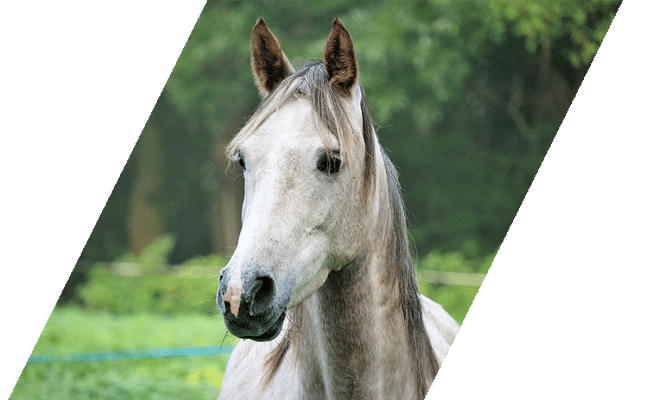
Although less is understood about food allergy in horses than in other species, gastrointestinal signs such as diarrhoea/loose stools, chronic colic and long-term weight loss are most commonly reported which may or may not be observed alongside skin signs.
References
- Jackson HA, Jackson MW, Coblentz L & Hammerberg B. (2003) Evaluation of the clinical and allergen-specific serum immunoglobulin E responses to oral challenge with corn-starch, corn, soy and a soy hydrolysate diet in dogs with spontaneous food allergy. Vet Derm 14(4):181-7.
- Bethlehem S, Bexley J & Mueller R.S. (2012) Patch testing in the evaluation of adverse food reactions in the dog. Veterinary Immunology and Immunopathology 145: 582–589.
- Olivry T, Mueller RS. Critically appraised topic on adverse food reactions of companion animals (3): prevalence of cutaneous adverse food reactions in dogs and cats. BMC Vet Res 2017; 13:51.
- Picco F, Zini E, Nett C et al. A prospective study on canine atopic dermatitis and food induced allergic dermatitis in Switzerland. Vet Dermatol 2008; 150-5:19.
- Ravens PA, Xu BJ, Vogelnest LJ. Feline Atopic Dermatitis: a retrospective study of 45 cases (2001-2012) Vet Dermatol 2014; 95-102:25.
- Gaschen FP and Merchant SR. Adverse food reactions in dogs and cats. Vet Clin North Am Small Anim Pract 2011; 361-79:41.